 Suspension IQ
Podium MX · the engineering ecosystem
Suspension that gets smarter every time you ride it.
At Podium MX Racing, suspension development starts with engineering principles and is refined through real-world performance. Suspension IQ brings predictive modeling, documented build configurations and rider feedback together in one connected system — a more precise, repeatable approach to suspension tuning.
Precision is not achieved by making more adjustments. It is achieved by making the correct adjustments the first time.
Podium Engineering Framework · Principle 04
The ecosystem
One system, three layers
Most suspension work lives in a tuner’s head, a notepad, a stack of Post-its and a box of shims. When that tuner is busy, or guessing, or gone, the work starts over. Ours lives in an ecosystem instead — and each layer hands something to the next.
Where a build is decided before a single part is touched. Each configuration is modeled and evaluated against a known baseline before assembly. By understanding how changes influence damping characteristics and overall system behavior, we can make more informed tuning decisions before the suspension reaches the track.
Every build, every revision, every stack — documented by bike and rider, including spring rates, clicker baselines, and the reasoning behind each change. Whether returning for routine service, performance upgrades, or a new rider setup, we pick up where the last build left off — never starting from scratch.
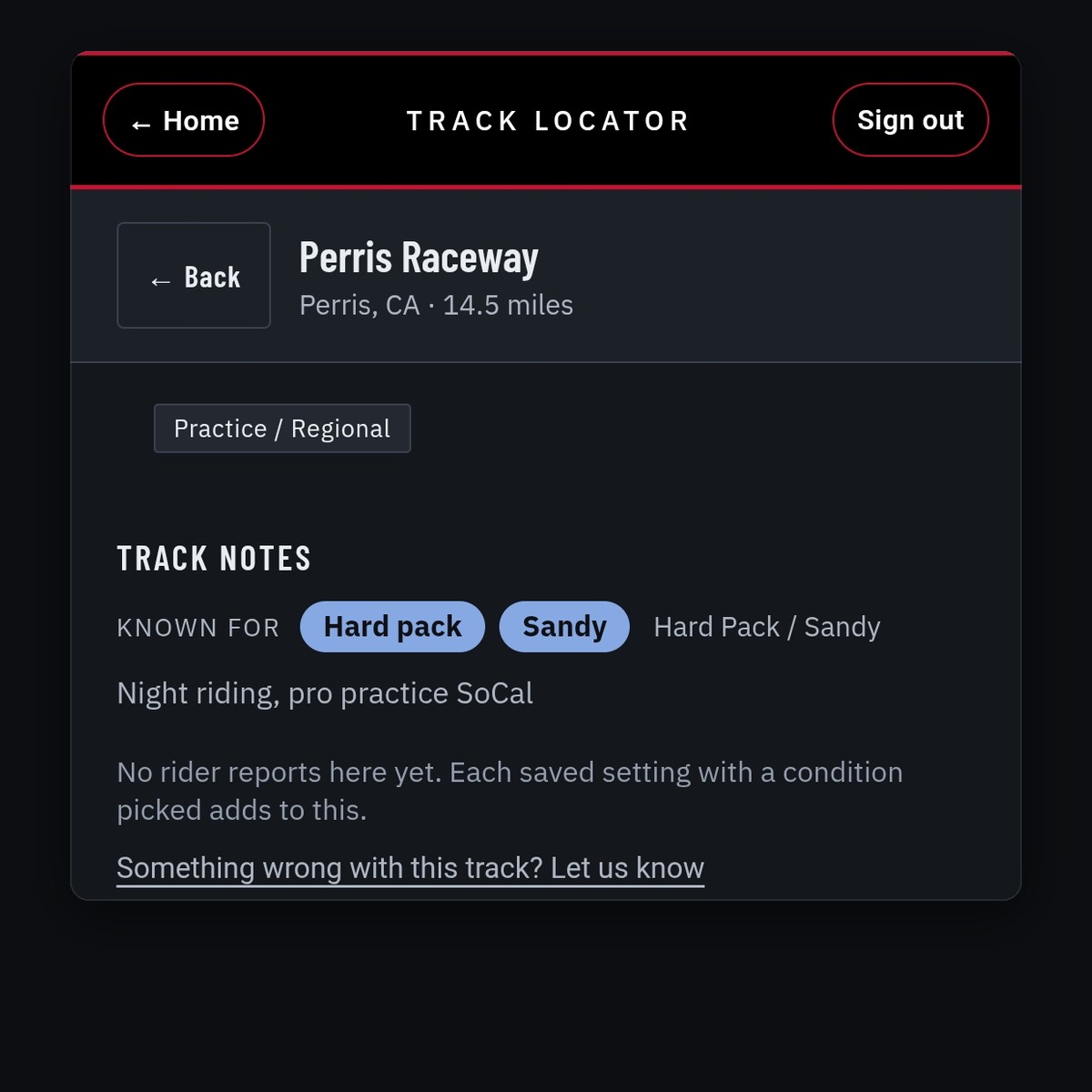
Underneath the rider app is the track database — the tracks you actually ride, with their terrain and layout, and the conditions of the day saved against the session you rode. A setting is only worth something next to where it was used.
On top of it: your bikes, your baseline and your clicker log, in your pocket at the track. Log what you changed and how it felt and it lands straight on your record.
How a build gets decided
Four principles, applied every time
These are the rules the valving logic is built on — the difference between a setting that works on your bike and a setting that worked on someone else’s.
PRINCIPLE 01 Suspension is a system of forces
A rider never feels a component. They feel everything the system is doing at once — and that combined result is what the build is aimed at.
PRINCIPLE 02 Segmentation creates control
Effective suspension design starts with understanding how individual components influence different regions of damping behavior. Managing those relationships is what creates control over the complete system.
PRINCIPLE 03 Force balance defines feel
Feel comes from how damping forces, spring characteristics, chassis geometry and rider inputs interact. Understanding those relationships is how you find the source of harshness, instability or lost compliance.
PRINCIPLE 04 Predictive modeling enables precision
By understanding the relationship between component design, damping forces and system behavior, we can predict the direction and relative influence of a change before track testing. That reduces unnecessary trial-and-error and lets rider feedback drive more focused refinements.
Who’s behind it
Born from racing. Built on engineering discipline.
Podium MX Racing began with a shared passion for riding and racing, and a simple ambition: bring the professionalism, preparation and attention to detail of a factory race team to our own weekend racing experience.
We may have been weekend racers, but we approached the sport with a professional mindset. That commitment to doing things at a higher standard ultimately shaped our approach to suspension development and engineering.
Every suspension system is built around fundamental engineering principles. Understanding how those systems were designed to function — and how changes to their components influence performance — is the foundation of effective suspension tuning.
Drawing on decades of aerospace manufacturing experience and firsthand racing knowledge, we developed PMX Suspension IQ to bring engineering discipline, predictive modeling, and sound technical logic to the suspension-building process.
Our approach doesn’t replace experience. It gives experience structure — turning what has long been treated as a dark art into a measurable, repeatable, purposeful process.
Podium MX Racing
A performance shop in Murrieta, California. Sells, builds and tunes suspension across every major platform, and is the engineering and suspension-development operation behind Suspension IQ.
Lainer Suspension USA
Official U.S. distributor for Lainer Suspension, bringing Italian suspension technology, components and performance solutions to American riders and suspension professionals.
Podium Motosports
A Southern California TM Motorcycle dealership focused on motorcycle sales, technical service, engine performance and racing support.
Why it is built the way it is
Aerospace manufacturing operates on a fundamental principle: performance must be repeatable, changes must be traceable, and every configuration must be controlled. Suspension IQ borrows that discipline and points it at a fork and a shock.
Configuration control
Nothing changes without a revision, a date and a recorded reason. The current spec is never in doubt.
Traceability
Any unit’s history reads back in order — what went in, when, and what the change was for.
Modeled first
Behavior is predicted and compared before the part is built, not discovered after it is on the bike.
One standard
The same job done the same way every time, logged, rather than held in one person’s memory.
The valving logic
A stack is not stiff or soft. It is a curve.
Every valving configuration produces a unique damping response. Suspension IQ models those characteristics, compares a proposed revision against the baseline, and helps us judge the likely influence of a change before committing to the build.
How a build is documented
Written down, revision by revision
Every build carries a number, every change carries a revision and a date. Nothing about your bike lives in anyone’s memory — which is what makes the next change a refinement instead of a fresh guess.
- platform
- fork & shock family
- rider
- weight without gear, pace, discipline
- spring
- front and rear, preload, race sag
- oil
- type, weight and level, front and rear
- stacks
- recorded line by line, both ends
- baseline
- the clicker settings you start from
- why
- what was asked for and what changed
Field structure, not a real build.
The record is also the library. Every platform family we build for is filed with the reference that belongs to it. Different hardware is a different problem, and it is filed as one.
What is inside any one build stays inside.
For riders
What you get with a build
Suspension IQ puts your bikes, your settings and your history in your pocket. It was built to be used at the track, not at a desk.
Hover or tap any tile.
Say it how you’d say it
You don’t need the vocabulary. Tap a complaint to see where Suspension IQ starts looking.
These are starting points, not verdicts — most symptoms have more than one possible cause. What it is worth is knowing how far to move, on which adjuster, for your bike and your platform, and that comes out of the library.
The open loop
Every revision makes the next one smarter
This is the part that makes the system worth more in a year than it is today. Nothing you log is filed and forgotten.
You log it
Clickers, track, conditions, and how it felt — on the day, while it is still fresh.
We review it
It lands on your build in the library, where we go through it — and either accept the change into the current revision or open a new one from it.
It becomes a revision
Modeled first, then cut. The record carries what changed and the reason, so the next one starts from an answer.
We refine the method
As data builds across riders, bikes and conditions, we look for repeatable patterns, validate them, and feed what holds up back into the modeling.
From the pits
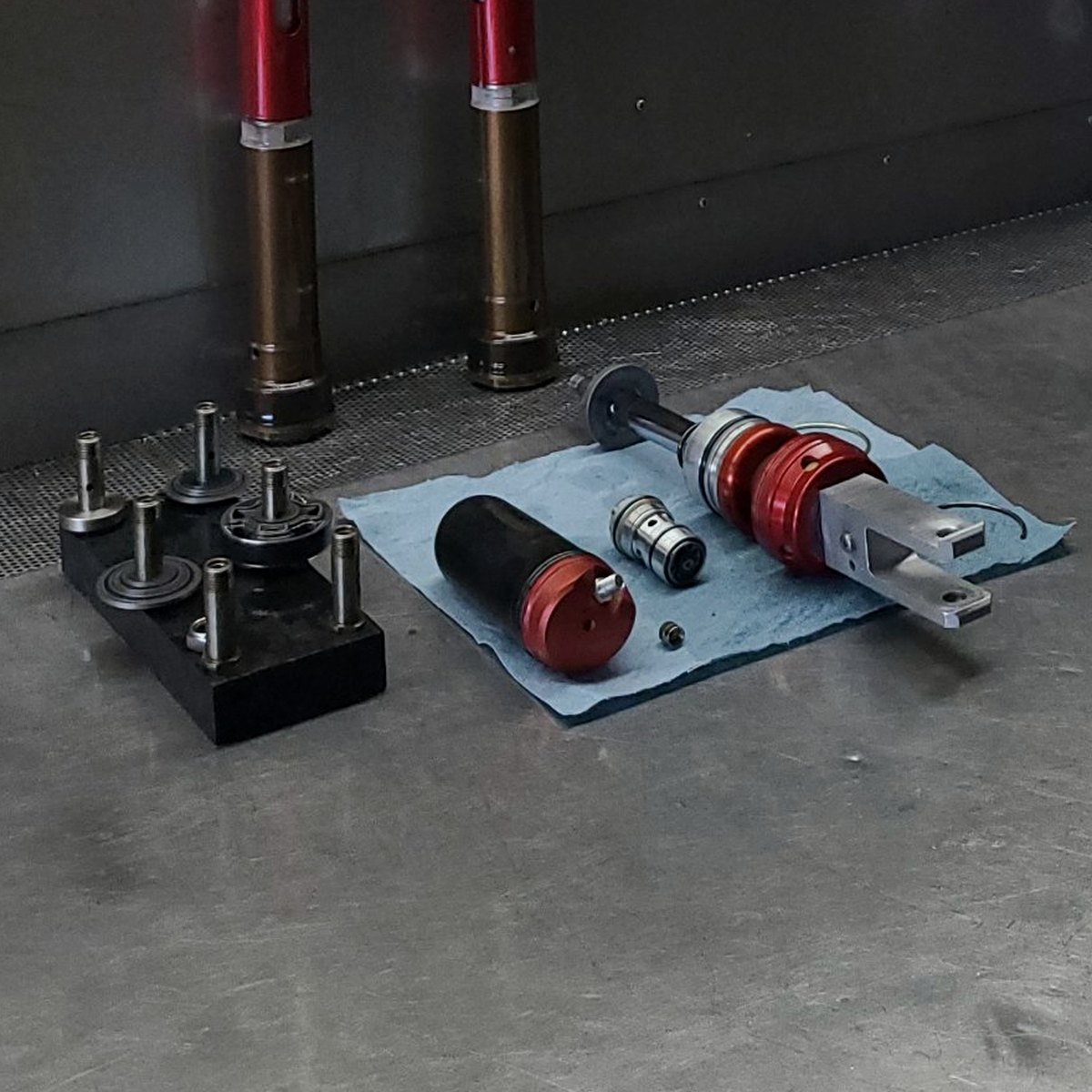
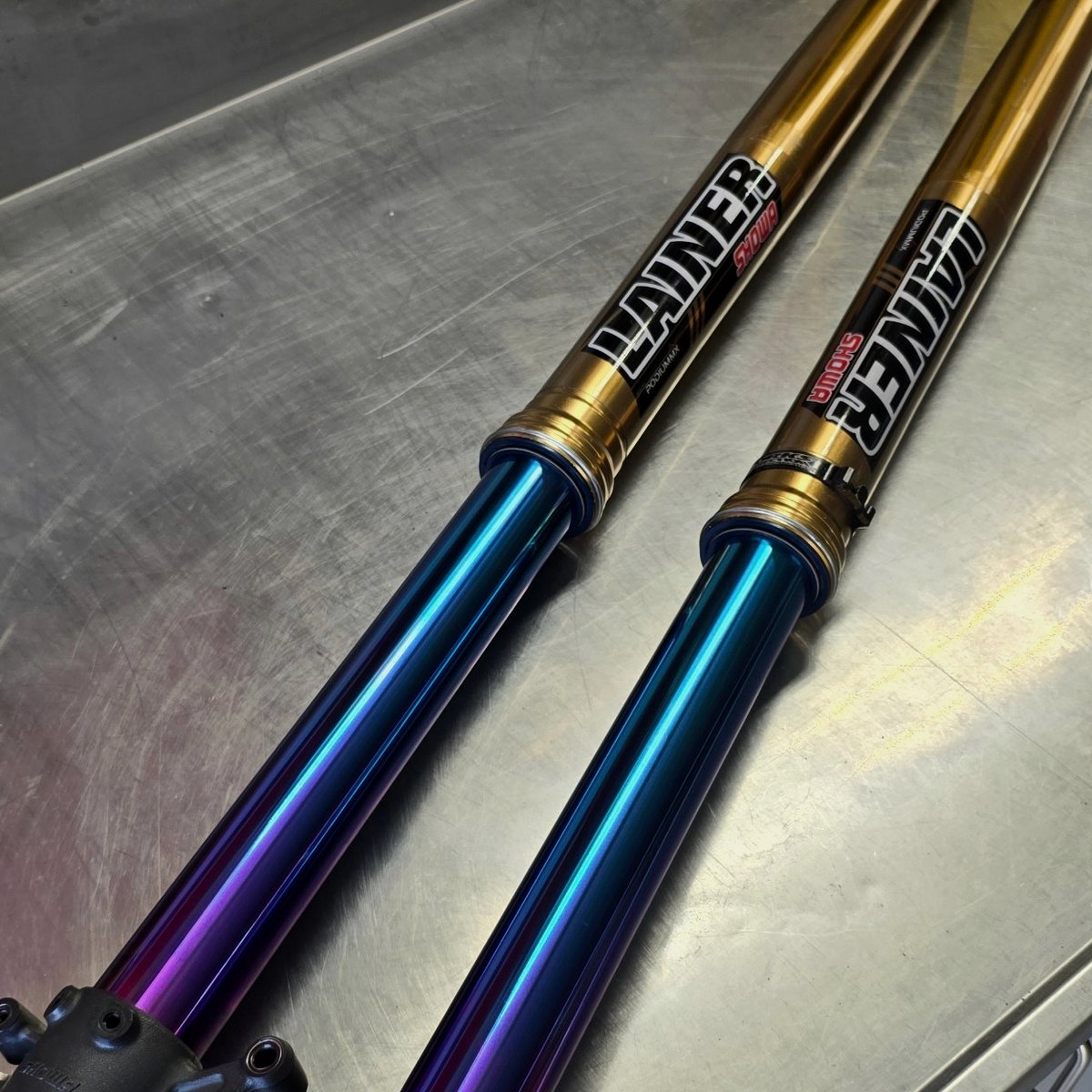
The part that is meant to be seen
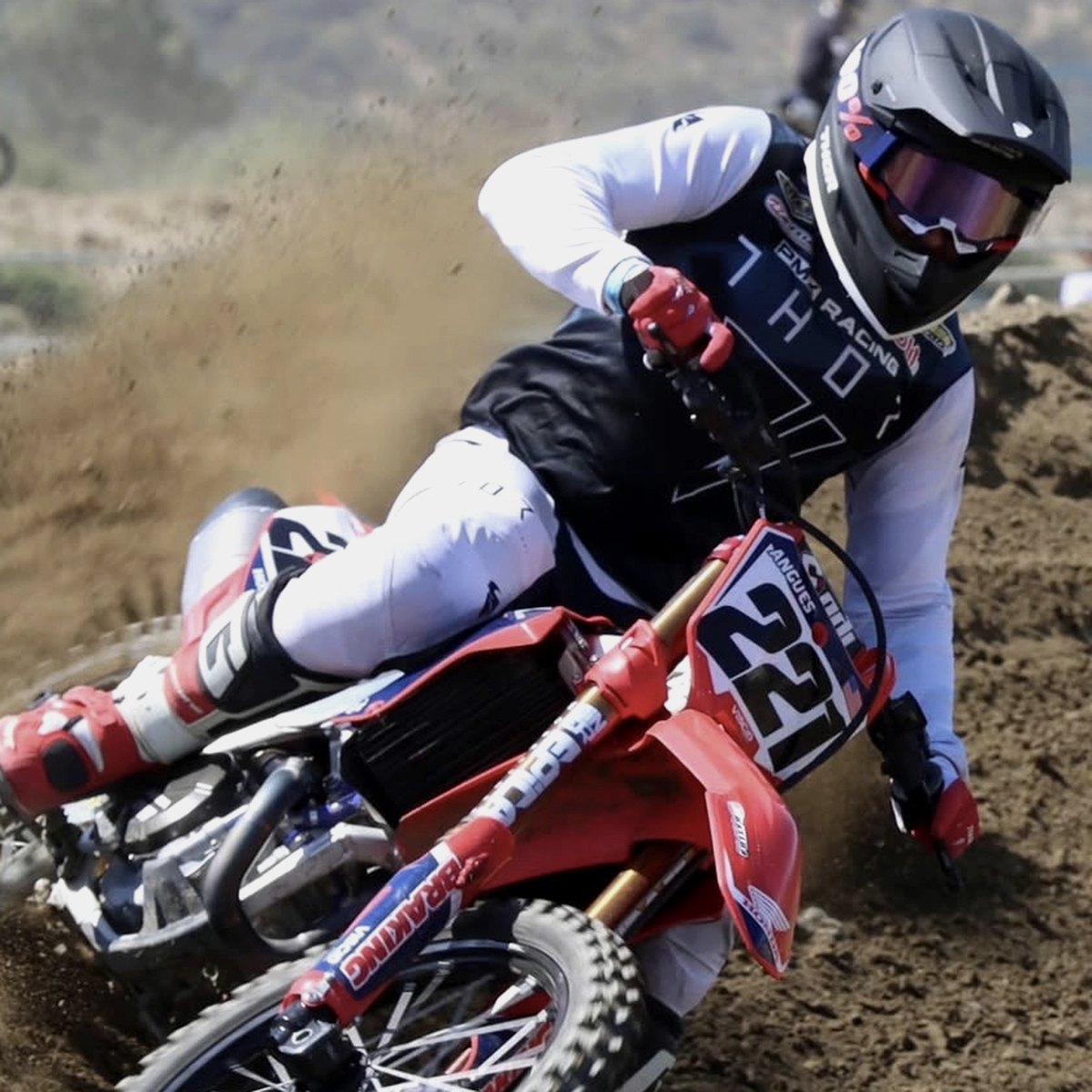
Access starts with a build
Suspension IQ is being introduced to Podium riders through our beta program. Eligible builds are connected to a digital record, giving the rider their setup information, revision history and the trackside tools. Want in? It starts with the suspension.